How to Prepare Your Child for Their First ABA Session

In short: Start by talking with your child's BCBA about what to expect. Prepare your child with a calm morning, pack comfort items, and plan to stay nearby during the session. Most insurance plans, including Medicaid, cover ABA therapy; our free matching service can help you find vetted providers.
Key takeaways
- Talk with your child's BCBA beforehand to understand the session structure and goals.
- Prepare your child with a predictable morning routine and pack a comfort item.
- Plan to stay present for the first session to observe and participate as suggested.
- Ask about insurance coverage and get pre-authorization if needed; ABA is often covered.
Find your child's ABA provider
About 60 seconds · free & confidential
- ✓ Vetted, BCBA-led providers
- ✓ In-home, center & telehealth
- ✓ No obligation, ever
What Is ABA Therapy and Why Preparation Matters
Applied behavior analysis (ABA) therapy is an evidence-based approach that helps children with autism and related developmental differences build essential skills-like communication, social interaction, and self-care-while reducing challenging behaviors. The first session is a crucial milestone. Thoughtful preparation can ease anxiety for both you and your child, set a positive tone, and help the board certified behavior analyst (BCBA) gather the information they need to create an effective, individualized plan. This guide walks you through everything you can do to make that first meeting a success.

🔗 Related reading: Best ABA Therapy in Florida for Your 4-Year-Old · Nearby ABA Therapy
Step 1: Communicate with Your BCBA Before the First Session
Your child's BCBA is your partner. Before the first session, schedule a brief call or meeting to clarify logistics and build rapport. Ask specific questions to know exactly what to expect.
Questions to Ask Your BCBA
- Where will the session take place? In-home, at a clinic, or in the community? This affects how you prepare the environment.
- How long is the session, and what is the schedule? First sessions often run 1-2 hours, but this can vary.
- Will you need any items from home? Some BCBAs ask for favorite toys, snacks, or a comfort object to help with pairing and rapport.
- What role should I play? Some therapists want you nearby; others prefer you step away briefly to encourage independent engagement.
- Should I bring any documents? Insurance cards, diagnostic reports, or prior authorizations may be needed.
This conversation also lets you share any immediate concerns-like your child's sensory sensitivities or recent changes in routine-so the session can be adapted accordingly.
Looking for ABA therapy for your child? We match families with vetted, BCBA-led providers near you.
Get matched freeStep 2: Talk to Your Child About ABA in a Positive Way
How you frame ABA therapy matters. Use simple, positive language that your child can understand. Focus on the fun, not the "work."
What to Say
- "A new friend is coming to play and learn with you."
- "We'll have special toys and games together."
- "This is a time just for you to practice new things."
Avoid words like "therapy," "doctor," or "test." For nonverbal children, use visual supports-like a social story or a simple picture schedule-to preview the session. Role-playing with stuffed animals can also demystify the experience.

🔗 Related reading: Florida ABA Therapy Through LTF Waiver: A Guide · Nearby ABA Therapy
Step 3: Establish a Calm Morning Routine
A predictable, low-stress morning sets the stage. Keep the morning similar to other days, but allow a little extra time for transitions.
- Stick to familiar wake-up and breakfast routines.
- Reduce sensory overload: dim lights, play soft music, or offer a favorite calming activity.
- Avoid rushing: give plenty of time to get ready without pressure.
- Use a visual countdown (e.g., "In 10 minutes, our new friend will arrive") to prepare your child for the transition.
A calm child is more ready to engage. If your child is anxious, accept their feelings and offer reassurance. You can also schedule the session at a time of day when your child is typically most alert and comfortable.
Step 4: Pack a Comfort Kit and Familiar Items
Having familiar objects can help your child feel secure and make the session more productive. Pack a bag with items the BCBA has requested, plus a few extras.
What to Include
- Favorite toys or books that motivate your child.
- Comfort items like a blanket, stuffed animal, or weighted lap pad.
- Sensory tools (e.g., fidgets, noise-canceling headphones) if your child uses them.
- Preferred snacks and drinks (check with BCBA about using food as a reinforcer).
- Extra clothes in case of spills or accidents.
Label everything clearly. Your BCBA will use these items to build rapport and identify powerful reinforcers for future sessions.
Step 5: Know What to Expect During the Session
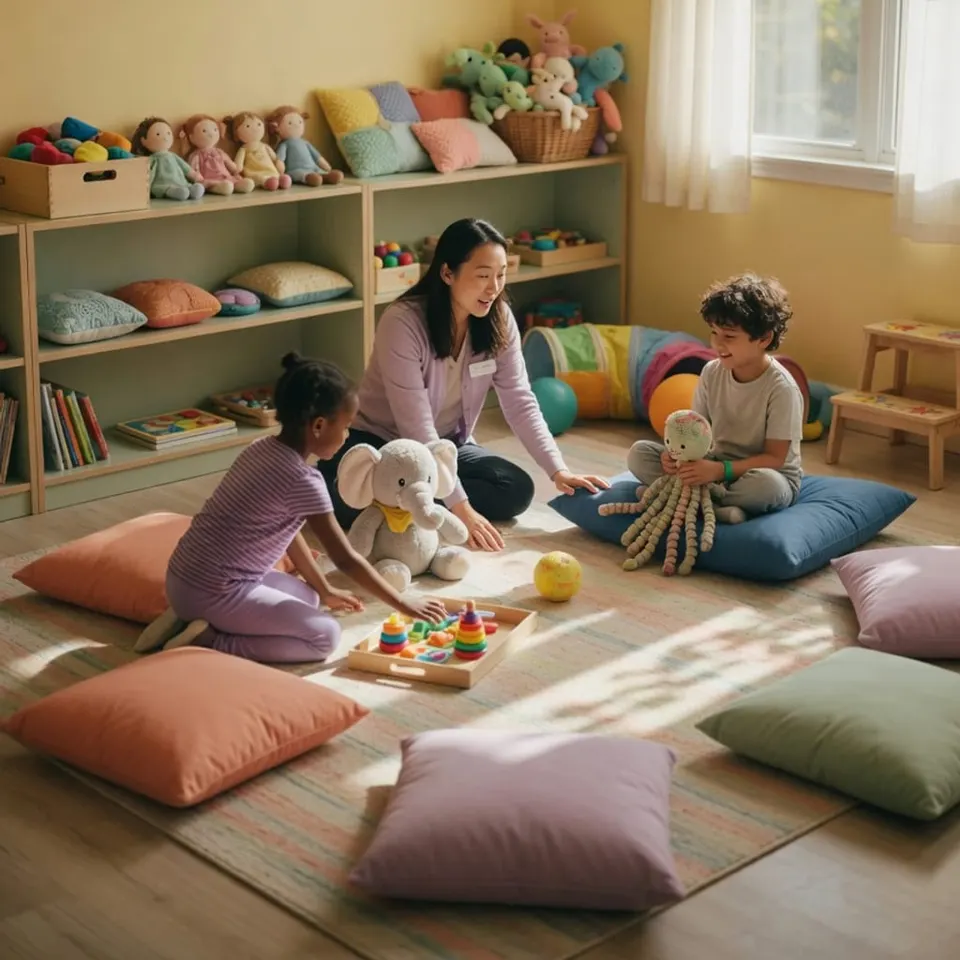
Every session is unique, but the first one follows a typical structure. Knowing this can ease your own nerves.
The First Session Breakdown
- Pairing and rapport building (15-30 minutes): The BCBA will follow your child's lead, play alongside them, and create a positive association. No demands are placed during this phase.
- Informal assessment and observation: The BCBA observes your child's communication, play, and behavior in natural situations. They may take notes but will not interrupt.
- Parent interview (if time permits): You'll be asked about your child's strengths, challenges, and your goals for therapy.
- Possible brief trials: Only if your child is comfortable, the BCBA may introduce a simple instruction or request to gauge the child's response.
Your role is to stay calm and supportive. If the session is in-home, you might be asked to stay nearby or in another room. In a clinic, you'll likely observe through a one-way mirror or in the waiting area. Trust the BCBA's guidance.
Step 6: Plan for Insurance and Costs
ABA therapy is widely covered by insurance, including Medicaid, but the first step is verifying your benefits. Our free matching service, Local ABA Therapy, can help you connect with vetted BCBA-led providers who accept your plan.
What You Should Do Before the First Session
- Confirm coverage: Call your insurance or ask the provider to verify your out-of-pocket costs. Most plans cover ABA for autism under the essential health benefits.
- Obtain pre-authorization: Many insurers require this before the first session. Your BCBA's office usually handles it, but double-check.
- Discuss payment options: If you're self-paying, ask about sliding scale fees or monthly payment plans.
State Medicaid programs often cover ABA with no copay. The early intervention system in your state may also provide funding. Our matching service can help you navigate these options.
Step 7: Common Mistakes to Avoid When Preparing for ABA
Even well-meaning parents can stumble. Here are pitfalls to sidestep.
- Over-preparing your child with too much information. Keep explanations simple to avoid raising anxiety.
- Expecting immediate progress. The first session is about building trust, not making big leaps.
- Comparing your child's experience to others'. Every child is different; celebrate small wins.
- Forgetting self-care. You are part of the team. Take a deep breath, and ask for support when needed.
- Skipping the insurance check. A surprise bill can add stress. Get coverage details squared away early.
Remember, you are your child's best advocate. A calm, informed approach makes the first ABA session a positive foundation for the journey ahead.